Small Islands, Big Storms, Our Future:Caribbean Nations’ Fight to Reshape Global Climate Finance

Climate Spotlight Staff
Climate Spotlight
By: Chalsey Gill Anthony, Environmental Communicator, on behalf of Caribbean Policy Development Centre (CPDC)
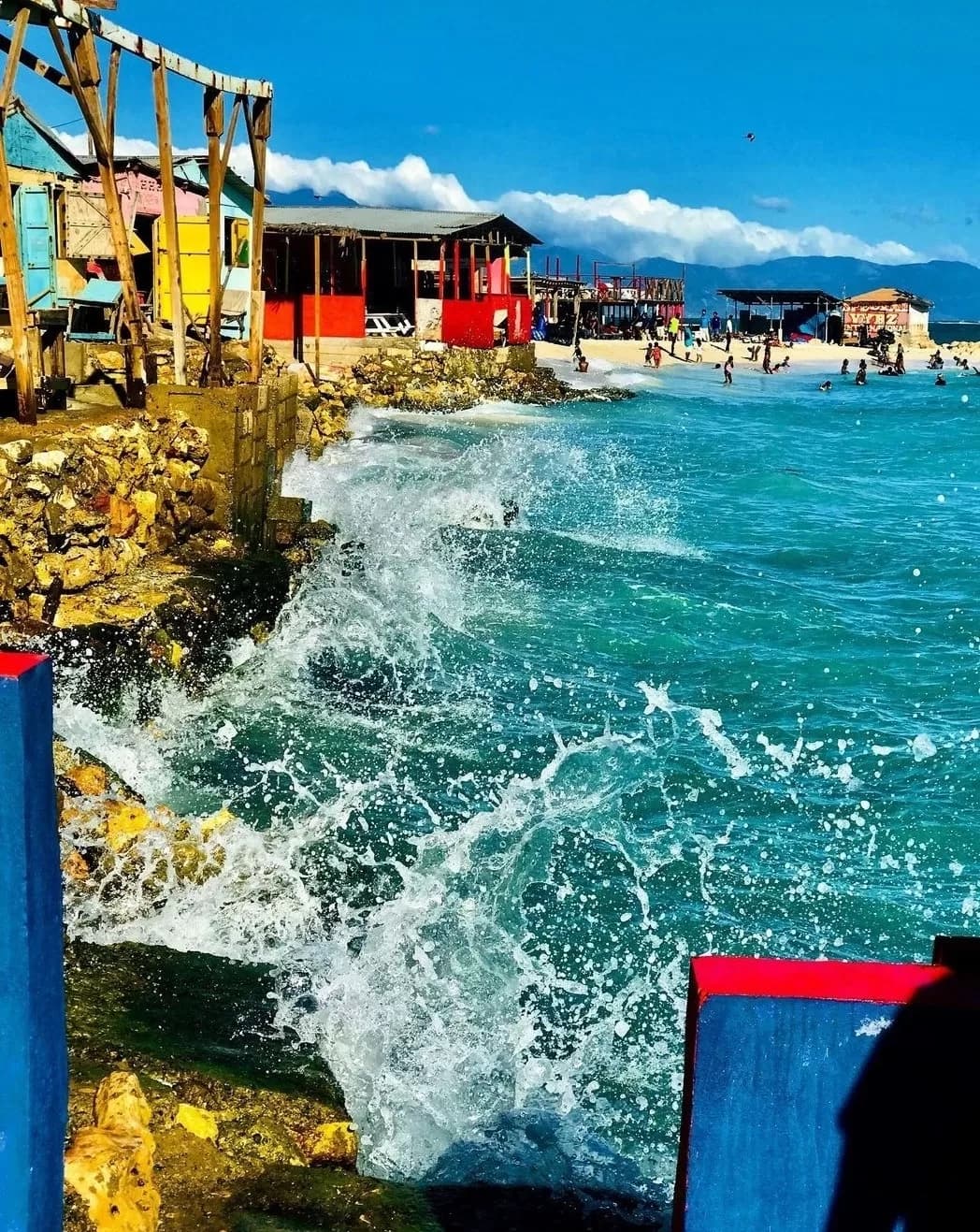
The familiar shoreline of Hellshire Beach in Jamaica is disappearing. Mario Galbert remembers the beach from his childhood, a stretch of golden sand where people played football, danced at parties, and cooled off in the Caribbean waters. Today, that beach no longer exists.
“If you go to that beach now, there is no more shoreline for you to even walk on, to swim on, to sit and play in the sand,” says the Jamaican youth climate activist. “Water has taken over everything.”
This is personal for Mario. But it’s also a warning that shows what’s happening all over the Caribbean as climate change speeds up.
The Invisible Crisis
The region stands on the frontlines of a crisis we did not create. Yet, when global decisions are made about how to finance climate resilience, the Caribbean is barely in the room, let alone at the table.

“It is extremely difficult to access recovery funds,” explains Ambassador Carlos Fuller, Permanent Representative of Belize to the United Nations. “In fact, there is no specific fund for recovery… Everything comes through humanitarian assistance and mostly loans.”
The challenges go deeper than just insufficient recovery funds. Ambassador Fuller highlights a critical gap in disaster preparedness: “Our ability to show very early what is at risk. If you have a major event, you then have to go around to see what was damaged. But if you didn’t even do the preparatory work before the event, then you wouldn’t know where to go.”
Ambassador Fuller recalls a personal experience during his time as Chief Meteorologist at Belize’s National Meteorological Service. “There was a tropical storm that hit Northern Belize. But they had a private insurance for a hurricane. The papaya fields went down due to winds of sixty miles an hour and the insurance man asked me if I ‘can’t find another fourteen miles an hour to make it a hurricane.’”
Just imagine—needing to “find” extra wind speed to trigger an insurance payout, despite farmers losing everything. These rigid systems often miss the lived reality of climate impacts across our region.
When Regional Priorities Are Sidelined
Caribbean Economist, Dr. Donneil Cain recounts an example of how the lack of Caribbean weight can derail climate ambitions: “A GCF Coral Reef rehabilitation project developed by CCCCC, with a valued US$50 million benefiting six Caribbean countries, was never approved. Despite the importance of coral reef for the Caribbean region. In the same breath, GCF approved the Global Coral Reef Fund, which was much larger, and suggested that CCCCC submit that proposal to that facility.”
Another challenge Dr. Cain identifies is how multilateral development banks approach climate finance: “The development banks are somewhat still in that phase of mainstreaming climate change into their operations; whilst responding to other competing development priorities. There are seventeen development goals of which climate action is only one.”

This creates a fundamental mismatch in timing and priorities. “If you have two million dollars to build a school. The government wants that school now,” Dr. Cain explains. “Then you’re going to tell the government, ‘Let’s get some climate finance and make it resilient but we can’t do it till two years when funding is approved.’ They’re going to say no, we will move ahead with our school.”
A Question of Power
Caribbean SIDS collectively hold just 1.01% of total votes at the World Bank, one of the primary institutions designing climate financing instruments for vulnerable nations. Meanwhile, the United States alone controls 15.84% of voting power.
This power imbalance means the financial tools created to address climate impacts often don’t fit the realities of those most affected.
“If CARICOM member states had seats and are given more significant roles in the decision-making processes, these organizations would be more tailored towards the needs of SIDS, responsive and fit for purpose,” argues Dr. Cain.
Youth Leading from Behind
For Mario and other young Caribbean climate activists, it is frustrating to see their futures being decided in rooms they cannot access.
“Our young people are being engaged at the local and regional level, but at an international level we are not well engaged,” Mario explains. “If you go to any of these large climate change conferences, and you look at the Caribbean contingent of delegates, and our young people… they’re a smaller number.”
Young people have the most at stake because they will inherit whatever climate future today’s decisions create. “We are the future policymakers so we should be guiding the decisions,” says Mario.
Reimagining Climate Finance
The Caribbean Policy Development Centre (CPDC)’s publication “How Can the World Bank Better Support the Shared Debt, Climate, and Development Financing Challenges Facing Caribbean SIDS?” propose reforms: increasing basic votes for smaller nations in multilateral development banks, introducing weighted voting for climate-related issues, creating debt relief specifically for middle- and high-income Caribbean nations, and using more sophisticated vulnerability metrics beyond simple per-capita income.

These reforms would transform how climate finance is structured and distributed. “Even if it doesn’t exist, it can be created to meet our needs,” notes Jwala Rambarran, author of the CPDC study. He pointed to the creation of the Caribbean Catastrophe Risk Insurance Facility after Hurricane Ivan as evidence that innovative solutions are possible when there’s political will. “We are creative people. We are resilient people. We could tinker with our problems and come up with solutions.”
Tangible Impact, Tangible Hope
What would meaningful change look like? For Mario, it’s about ensuring climate finance reaches communities that need it most. “It’s not just about getting the money,” he says. “The people who are being affected the most should be the ones who are benefiting from this.”
For Dr. Cain, the push for Caribbean representation in global financial governance is about seeing real changes in people’s lives: “If we’re not in the room, then we don’t have a voice in shaping the mechanisms that will influence or affect us within our spaces.”
He shares a vision of his personal reward: “What I am looking forward to is saying to my kids, ‘I supported that asset or system to become climate resilient, and it contributed to catalysing change in the Caribbean’.”
A Future Worth Building
For the Caribbean, having a seat at the global financial table is about survival. The climate crisis means more beaches like Hellshire disappearing, more communities displaced, and more economies struggling under climate-induced debt.
“We are very small islands. We don’t have a large land mass,” Mario reminds us. “Most of our people live nearby shorelines.”
If we truly want solutions that actually work for the Caribbean, then the world’s financial institutions must recognize our region’s unique vulnerabilities. And our voices must carry proportional weight in global climate finance so that funding can flow efficiently to those most affected.