When the Storm Passes, the Debt Remains – The Caribbean’s Struggle to Rebuild!

Climate Spotlight Staff
Climate Spotlight
By: Chalsey Gill Anthony, Environmental Communicator, on behalf of Caribbean Policy Development Centre (CPDC)
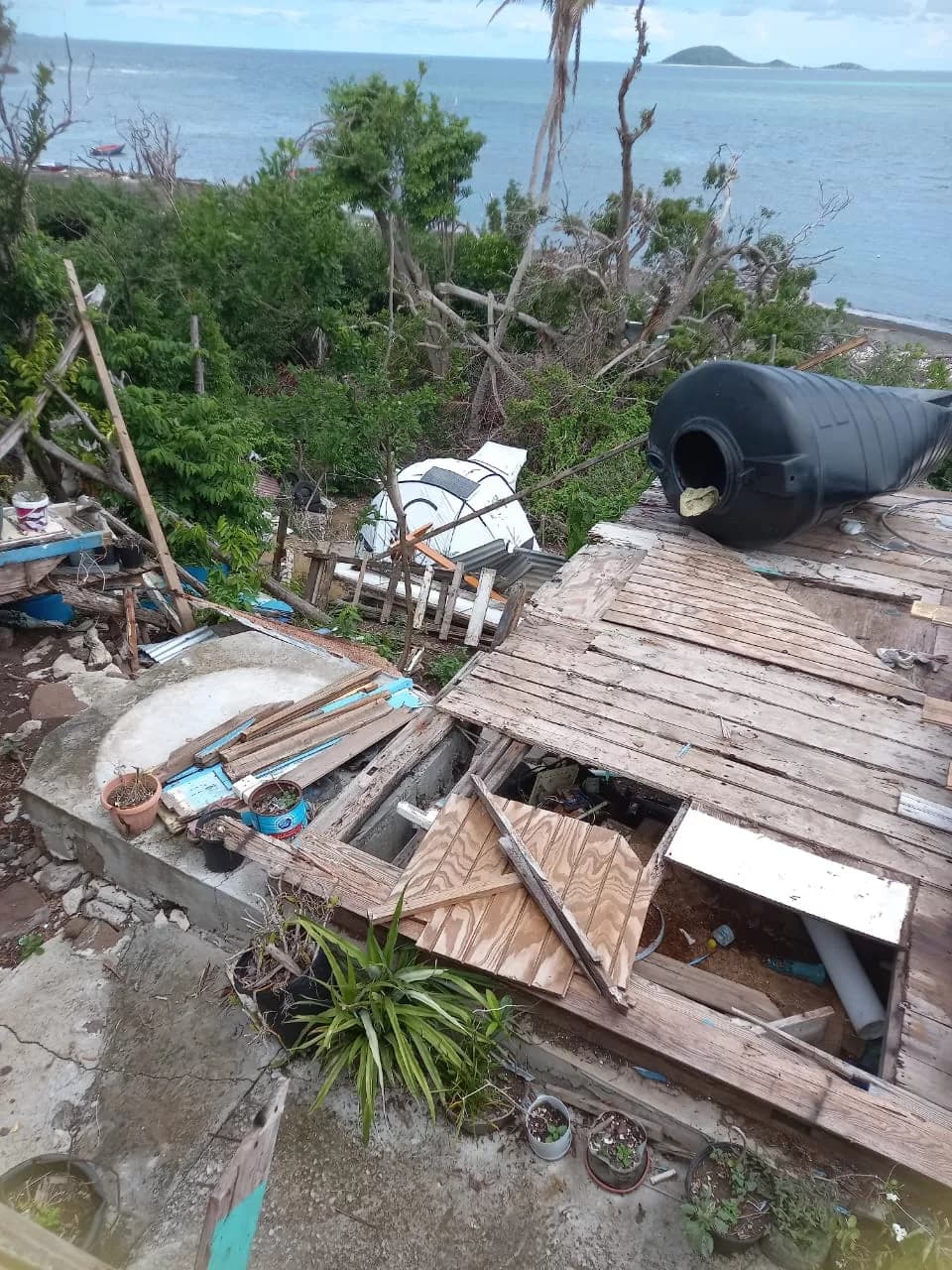
The roof was collapsing. Water poured in from every direction. As Hurricane Beryl’s 150 mph winds tore through Carriacou, Kisha McFarlene huddled with others in a building that was coming apart around them. “I became a pastor during Beryl,” she recalls, voice still unsteady months later. “I prayed like never before. If that hurricane had come at night, we would’ve been dead.”
When Kisha finally returned to her island after being rescued, the devastation was heartbreaking and hard to process. “All I could see was sticks standing where houses used to be. I thought everyone had died.”
But Kisha’s story also exposes a financial reality few outside the Caribbean understand: while Kisha slept on a wet mattress in a church and dried herself with priest’s robes, international financial systems designed to help in these exact situations were failing spectacularly.
Jwala Rambarran, who researched how the World Bank could better help Caribbean countries, found that even the more prepared nations face major gaps in their protection.
“Jamaica is far ahead on disaster financing, yet even they received nothing from their expensive catastrophe insurance bond after Beryl,” Rambarran explains. Jamaica had paid for a $185 million catastrophe bond but got zero dollars in payout after Beryl caused $200 million in damage because the technical triggers weren’t met.

“The conditions that activate insurance payouts – what we call ‘parametric triggers’ – are too hard and inflexible,” says Rambarran. “Countries are getting hit twice – paying more for insurance, and then when disaster comes, they get no payout.”
This system is designed without Caribbean voices at the table.
Caribbean nations hold just 1.01% of World Bank voting power, leaving them virtually voiceless in creating the very financial tools meant to protect them. The catastrophe bonds, insurance mechanisms, and loan conditions all reflect priorities set by others.
“The problem is that donors have so many conditions,” says Dr. Ulric Trotz, renowned Caribbean climate scientist and former Deputy Director of the Caribbean Community Climate Change Centre. “Even after approval, there’s such a long period before you get any money. We’re in a crisis!”
The result is a cruel cycle that Rambarran’s research exposes in detail: Hurricane Beryl cost Grenada 16.5% of its entire economy and St. Vincent and the Grenadines a staggering 22%. To rebuild, these countries must borrow more, deepening already critical debt levels that consume up to 30% of national budgets.
With resources diverted to repay debt, less remains for building resilience against future storms. When the next hurricane inevitably hits, the cycle worsens.
Making everything harder, most Caribbean nations are classified as “middle-income” countries based solely on average Global National Income (GNI) per capita, cutting them off from low-cost financing options despite being extremely vulnerable.
“That designation is based on GNI per capita that doesn’t take into account the distribution of income,” Dr. Trotz explains with a telling metaphor: “Imagine we’re classified as poor, and Bill Gates moves in tomorrow. Suddenly we become ‘middle-income,’ but it doesn’t reflect the poverty that exists.”
Meanwhile, on Carriacou, the human cost of these financial failures continues to grow. “If a wind blows now, I get very scared,” Kisha admits. “Many people are still traumatized.”
The psychological effects from Hurricane Beryl has led to increased alcohol consumption and domestic violence. “People turn to alcohol to numb the fact that they’re still sleeping in tents or crowded into small spaces with 10 or 11 others,” she explains.
From her village, Kisha instinctively understands what financial experts have documented:
“We need to understand climate change is real. Instead of waiting until after disaster strikes, we should make policies now, do training, and invest more.”
Solutions exist. Rambarran’s research highlights how ‘Climate Resilient Debt Clauses’ could allow Caribbean nations to pause debt payments after disasters, freeing up critical funds for recovery. His work also recommends creating a ‘Loss and Damage Data Hub’ to assist governments with reconstruction after a disaster and calls for a ‘Multidimensional Vulnerability Index’ – a new way to measure a country’s need that considers actual climate risks, not just income, ensuring Caribbean nations aren’t unfairly labeled “too rich” for the help they need.
As another hurricane season approaches, Kisha wonders about the recovery of her community. “People are still easily triggered,” she says. ” They might not be saying it, but you can see it. They snap at little things.”
For Caribbean nations trapped in this cycle, the nightmare never truly ends. Like Kisha using church candles to find her way after Beryl, these countries urgently need better financial paths forward – ones they have a voice in designing.
Without change, the pattern continues: borrow, rebuild, repeat – each time leaving communities more vulnerable than before.
The comprehensive solutions are detailed in the Caribbean Policy Development Centre’s study: “How Can the World Bank Better Support Natural Disaster Risk Financing in Caribbean SIDS?“
The question now is whether the world will act before the next storm hits – or leave people like Kisha praying in the dark once again.